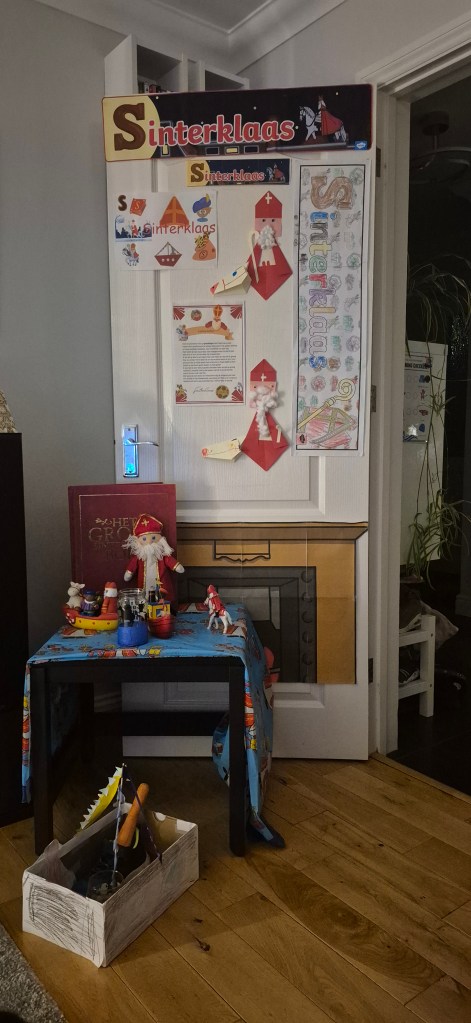
I adore this time of year. It’s a season that feels full of possibility, memory, and (if you’re parenting in more than one language) a surprising amount of logistics.
This year, Sinterklaas visited our home here in the UK on Friday night, and honestly, it has been a whole month leading up to that moment. A month of getting ready. A month of watching the Sinterklaasjournaal every single day. A month of little rituals that slowly transformed our house into something that felt unmistakably Belgian.
My son threw himself into it with full enthusiasm. He sang Sinterklaas songs on repeat, asked me endless questions about the traditions, wrote his letter, and made crafts with total devotion. And the language… my goodness, the language. More and more Dutch every single day. It was like Sinterklaas brought not just presents, but a whole linguistic boost with him.
And here’s the thing I kept noticing: the more effort I put in, the more I got back. It was joyful and affirming. But it was also a lot.
There’s always that quieter question in the background, the one that lives somewhere between pride and insecurity, wondering whether I’m pushing this holiday harder because it represents my heritage, the heritage that is the minority in our family life here in the UK.
Am I spotlighting Sinterklaas more than Father Christmas because I loved it so much as a child? Because I am the only one to pass that love on to him? Because I want Arthur to love it too? Because I want him to have access to the things that made me who I am?
This year, it worked. Arthur was all in. But the “what ifs” linger:
- What if he didn’t like it?
- What if he didn’t want to be different from his classmates?
- What if he wasn’t interested in this part of his heritage at all?
That’s the real balancing act multilingual and multicultural families live with: a constant negotiation between passing something on and allowing children the space to shape their own identity.
And now, Sinterklaas has waved goodbye for another year. The chocolate letters are (almost) eaten, the crafts are drying on the fridge, and we’re unmistakably shifting into the UK festive season. From now until the end of December, it’s going to be all about Father Christmas.
So the question becomes: how do I keep the minority language going? How do I make sure that my son doesn’t drift away from that other part of himself now that the big cultural event linked to Dutch has passed? How do I keep that linguistic and cultural momentum alive in a way that feels natural and joyful?
There aren’t easy answers, just the daily practice of noticing, adjusting, trying again. That’s the reality for so many multilingual families: these tiny, continuous decisions about what to pass on, how hard to push, and when to step back.
This year, Sinterklaas brought so much joy into our home. Next year? Who knows. Children change, contexts change, needs change. But the questions we carry as multilingual parents, the hopes, the worries, the deep desire to keep all parts of our children’s identities nourished, those stay with us.
And maybe that’s the heart of it: not doing it perfectly, but doing it with intention, love, and openness for whatever comes next.

Leave a comment