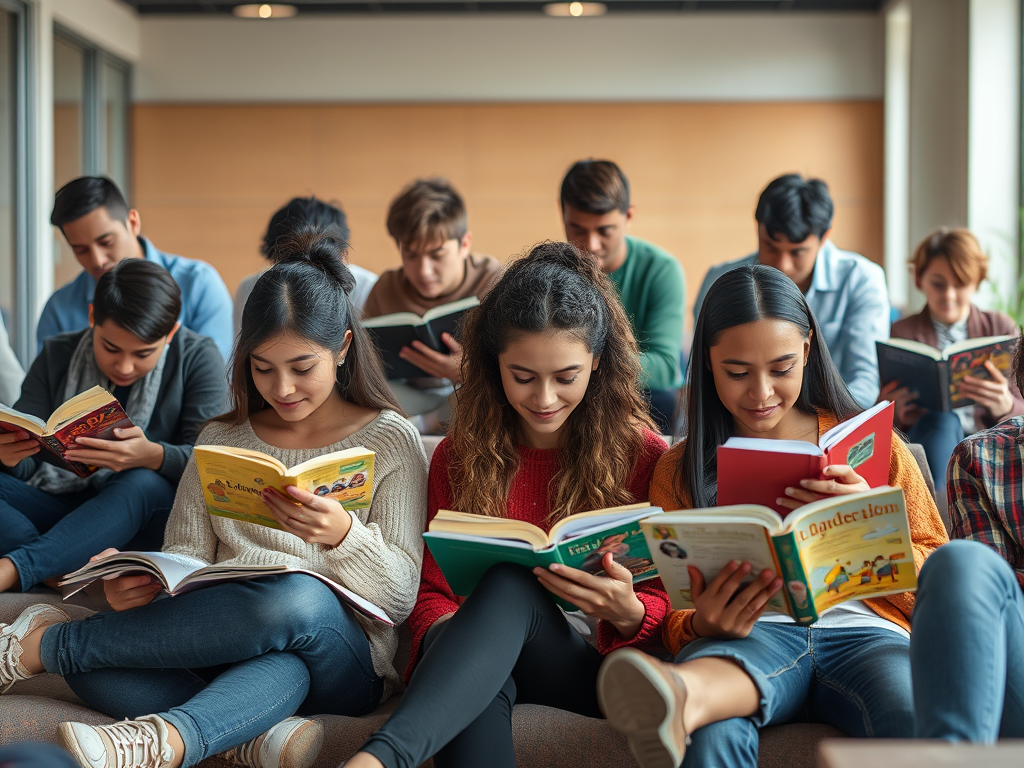
World Book Day is one of the most joyful moments in the school year. Costumes, book tokens, author visits, storytelling, library corners bursting with excitement… It’s a celebration of reading that children remember.
But there’s a group of texts that is often missing from the displays, the assemblies and the classroom story time:
The books our multilingual learners read and love in their home languages.
If World Book Day is truly about celebrating reading, then every language deserves to be heard.
Every language matters
Across our schools, children are reading in Arabic, Polish, Ukrainian, Tamil, Spanish, Pashto, Portuguese, Romanian, and many more. They are reading picture books with grandparents, WhatsApp stories from cousins, comics sent from home, dual-language books, and religious or cultural texts.
These are not “extra” literacies.
They are real, rich, meaningful reading experiences.
When we ignore them, we unintentionally send a message:
The reading that happens in English counts more.
When we include them, we send a different message:
Your language, your stories and your identity belong here.
World Book Day is the perfect moment
If there is one day in the year to open the classroom door to multilingual storytelling, this is it.
Invite parents, carers, grandparents or older siblings to come in and read a story in their home language.
It does not need to be complicated:
- A familiar picture book read in another language
- A traditional story from their culture
- A short poem
- A dual-language text
- Even a few pages is enough
Children do not need to understand every word to benefit. They gain:
- Pride in their language
- Exposure to new sounds and rhythms
- Curiosity about other cultures
- A powerful message that multilingualism is valued
And for the child whose language is being read?
It is transformative.
Use stories children already know
One of the easiest ways to do this is to use a story the class already loves.
Imagine:
- The Very Hungry Caterpillar in Arabic
- We’re Going on a Bear Hunt in Polish
- Goldilocks in Spanish
The familiarity of the story helps all children follow along, even if the language is new.
You can display key words in both languages, show the pictures, and let children join in with repeated phrases.
Picture books are powerful; but so are all texts
Picture books are a brilliant starting point, but they are not the only option.
Let’s also celebrate:
- Folk tales
- Comics
- Songs and rhymes
- Faith stories
- Oral storytelling
- Non-fiction texts
- Letters from family
- Recipes
- Newspapers
All of these are forms of literacy. All of them count.
This is inclusion in action
When parents come into school to read in their home language, something important happens:
- Families feel welcomed and valued
- Children see their identities reflected in the classroom
- Teachers learn about their pupils’ linguistic worlds
- The classroom becomes a multilingual space, not just an English one
This is not an “add-on” activity.
This is what inclusive practice looks like.
A simple starting point for schools
For this World Book Day, schools could:
- Ask families which languages they would like to share
- Invite volunteers to read a short story
- Create a multilingual story timetable for the day
- Display books and texts in different languages
- Let children bring in a favourite text from home
No budget required.
No specialist resources needed.
Just a willingness to listen.
Let every story be heard
World Book Day should be a celebration of reading in all its forms, in all its languages.
When we make space for multilingual texts, we are not just celebrating books.
We are celebrating identity, belonging and voice.
And that is a story worth telling.

Leave a comment